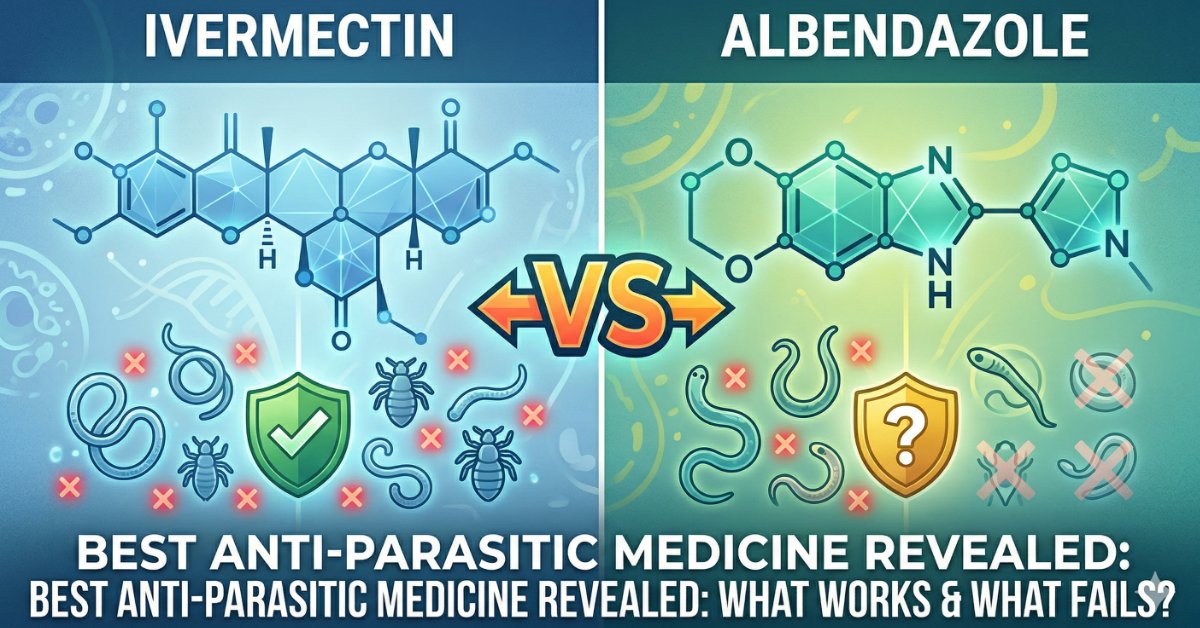
Parasitic infections are more common than most people think. According to the World Health Ivermectin vs Albendazole over 1.5 billion people worldwide have intestinal worms, and millions more suffer from skin parasites like scabies and lice each year.
Treatments are widely available today, but choosing the right one can be confusing. Using the wrong medicine may not fully cure the infection and can lead to unwanted side effects.
This simple guide compares Ivermectin and Albendazole, along with other common options like Mebendazole and Permethrin.
You’ll learn:
- What each medicine treats
- How it works
- How fast it acts
- When to see a doctor
This will help you choose the right treatment safely and confidently.
What Are Parasitic Infections?
A parasite is a tiny organism that lives in or on your body and feeds off you, causing harm.
There are two common types:
1. Intestinal parasites (worms)
These include roundworms, tapeworms, hookworms, pinworms, and whipworms.
They usually enter your body through dirty food, water, or soil and live in your intestines.
Common symptoms: stomach pain, diarrhea, bloating, weight loss, and tiredness.
2. Skin parasites
These include scabies (caused by the mite Sarcoptes scabiei) and lice.
They live on your skin or hair and cause strong itching, especially at night, along with rashes.
How infections spread:
- Contaminated food or water
- Contact with dirty soil
- Close contact with an infected person
- Sharing clothes or bedding
- In some cases, insect bites
Poor hygiene and crowded places increase the risk of infection.

Types of Anti-Parasitic Medicines
The most clinically relevant drugs for most infections in 2026 are Ivermectin (broad-spectrum antiparasitic), Albendazole (anthelmintic), Mebendazole (anthelmintic), and Permethrin (topical). Each belongs to a different class and has its own mechanism of action, making drug selection critical.
Comparison Table
| Medicine | Best for | Form | Speed | Rx required? |
| Ivermectin | Scabies, strongyloidiasis, river blindness | Oral tablet | 1–3 days (skin); 2 wks (intestinal) | Yes |
| Albendazole | Tapeworms, roundworms, hookworms, giardia | Oral tablet | 3–7 days | Varies |
| Mebendazole | Pinworms, whipworms, roundworms | Oral tablet / chew | 3–5 days | OTC in many regions |
| Permethrin | Scabies, lice (head & body) | Topical cream / shampoo | 8–10 hrs (lice); 1–2 wks (scabies) | OTC |
Detailed Comparison of Top Medicines
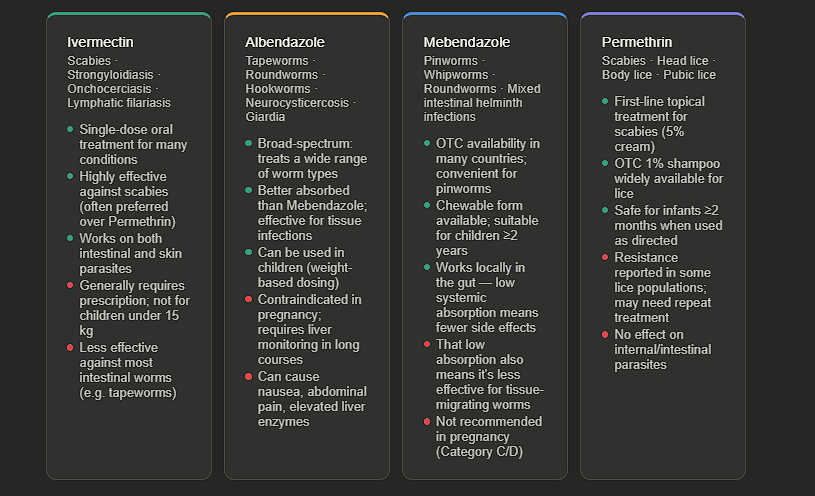
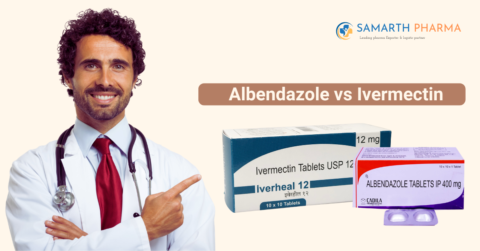
Ivermectin vs Albendazole: These are the two most commonly compared options. Ivermectin excels for skin parasites and certain tissue-dwelling worms, while Albendazole is the stronger choice for intestinal worms — especially tapeworms and infections that have migrated to tissue. For most standard intestinal infections in 2026, Albendazole or Mebendazole remain the clinical first-line choices.
Which Medicine Should You Choose?
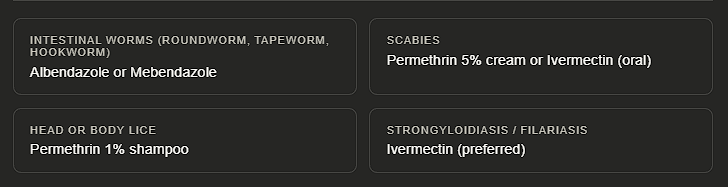
Severity also matters. Mild, uncomplicated pinworm infections in adults may respond well to a single OTC Mebendazole dose. But if you have a confirmed tapeworm, tissue cyst, or heavy worm burden or if you’re treating a child, an elderly person, or someone who is pregnant a doctor’s assessment is essential before starting any regimen.
How Fast Do These Medicines Work?
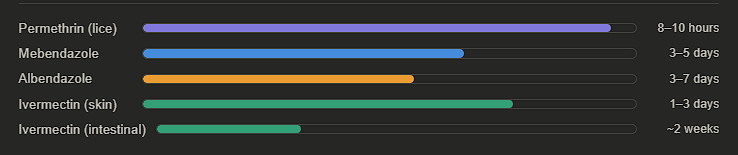
Speed depends on dosage, infection load, the individual’s immune response, and whether repeat doses are needed. Symptom relief (especially itch relief from scabies) may lag behind parasite death by several days as the body clears dead organisms.
Safety, Side Effects & Precautions

Most anti-parasitic medicines are safe, but some mild side effects can happen.
Common side effects:
- Nausea
- Stomach discomfort
- Dizziness
- Headache
Medicine-specific points:
- Albendazole – may affect the liver if used for a long time
- Ivermectin – can cause temporary dizziness or blurred vision at higher doses
- Permethrin – usually very safe, but may cause mild skin irritation
Who should be careful:
- Pregnant women (especially early pregnancy)
- Breastfeeding mothers
- Young infants
- People with liver problems
- Those with Loa loa infection (important when using ivermectin)
If you fall into these groups, always consult a doctor before taking any anti-parasitic medicine.
Where to Buy Anti-Parasitic Medicines Online
In 2026, anti-parasitic medicines are easy to find online — but safety matters.
When buying from an online pharmacy, look for these signs:
- Requires a valid prescription for prescription medicines
- Shows proper licenses or regulatory approval
- Offers secure payment and clear refund/return policies
- Provides clear details about where the medicine comes from
Avoid websites that sell prescription drugs without any checks — fake or low-quality medicines are a real risk.
Trusted online pharmacies usually offer:
- Worldwide shipping
- Discreet packaging
- Support from licensed pharmacists
Choosing a reliable source helps ensure you get safe and effective treatment.
“Check trusted-quality Ivermectin here…”
Frequently Asked Questions
Is Ivermectin better than Albendazole?
It depends entirely on the infection. Ivermectin is superior for scabies, strongyloidiasis, and certain filarial diseases. Albendazole is the better choice for most intestinal worms particularly tapeworms and hookworms. They are not interchangeable, and some infections require both.
Can I take anti-parasitic medicine without a prescription?
Mebendazole and Permethrin 1% shampoo are available over the counter in many countries. Ivermectin and higher-strength Permethrin creams typically require a prescription. Even for OTC options, a confirmed diagnosis is strongly recommended before starting treatment.
How often should I take these medicines?
Dosing varies significantly. Ivermectin for scabies is typically a single dose repeated after 2 weeks. Albendazole and Mebendazole courses range from a single dose to 3–5 days depending on the worm type. Permethrin for scabies is applied once and repeated in 1–2 weeks. Follow your doctor’s or pharmacist’s instructions precisely.
Are these medicines safe for long-term use?
None of these drugs are intended for long-term continuous use. Prolonged Albendazole use requires liver function monitoring. Ivermectin is generally used as short courses. Long-term or prophylactic anti-parasitic use should only occur under specialist medical supervision in high-risk or endemic settings.
Conclusion
Choosing the right anti-parasitic medicine in 2026 is simple: match the medicine to the parasite.
- Albendazole and Mebendazole are best for intestinal worms
- Ivermectin works well for scabies and some parasites inside the body
- Permethrin is ideal for skin and hair parasites
No single medicine treats everything.
The most important step is knowing what infection you have. The right diagnosis leads to the right treatment.
If you’re unsure, always consult a doctor before starting any medicine.
This article is for informational purposes only and does not constitute medical advice. Always consult a qualified healthcare professional before starting any anti-parasitic treatment.